
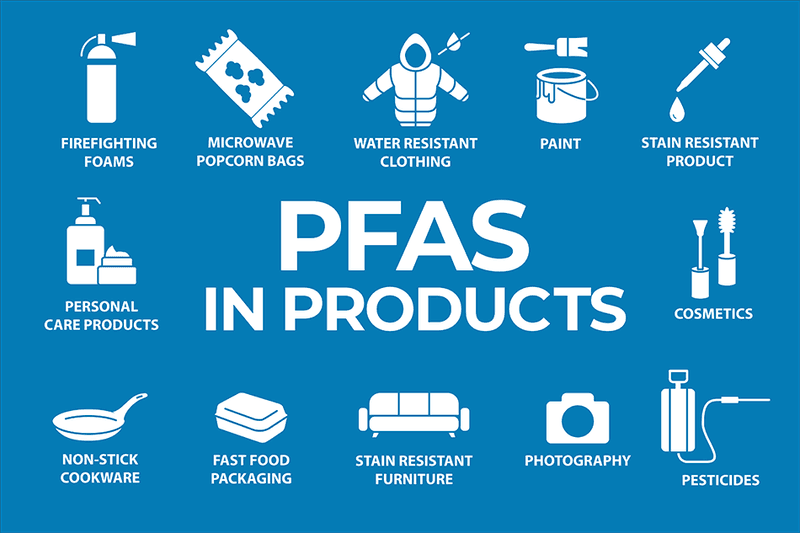
Per- and polyfluoroalkyl substances (PFAS) are a group of synthetic chemicals that resist water, oil, and heat. While these properties make them useful in many products, PFAS persist in the environment and accumulate in living organisms — earning them the nickname "forever chemicals."
This guide covers practical strategies for identifying and reducing your PFAS exposure across nine key areas of daily life.
Kitchen
Replace PTFE-coated non-stick cookware (such as Teflon) with stainless steel, cast iron, or ceramic alternatives. Avoid grease-proof food packaging — fast food wrappers, microwave popcorn bags, and takeaway containers often contain PFAS coatings.
Select unbleached, compostable parchment paper labelled PFAS-free for baking. When storing food, choose glass or stainless steel containers over plastic.
Personal Care
Check your cosmetics and personal care products for PTFE or ingredients containing "perfluoro-" or "fluoro-" in their names. These are particularly common in waterproof mascaras, transfer-proof lipsticks, and long-lasting foundations.
Choose untreated dental floss — some brands use PFAS coatings for that "glide" effect. Opt for natural wax-coated alternatives instead.
Clothing & Textiles
Select untreated fabrics rather than those marketed as stain-resistant or water-repellent. Many "performance" fabrics used in activewear and outerwear are treated with PFAS-based durable water repellents (DWR).
When shopping for outdoor clothing, look for brands that have committed to PFAS-free alternatives. Gore-Tex, for example, is transitioning away from PFAS in its membranes.
Home Furnishings
Skip the protective treatments offered for new carpets, rugs, and upholstered furniture — these are often PFAS-based stain guards. Use a HEPA vacuum regularly to reduce PFAS-contaminated dust in your home.
Be cautious with "stain-resistant" labels on bedding, curtains, and tablecloths. Natural, untreated fabrics are the safer choice.
Cleaning Products
Substitute plant-based cleaning agents for products containing PFAS-based waxes, sealants, or polishes. Some floor waxes, car polishes, and surface sealants contain PFAS for their water-repelling properties.
Look for eco-labelled products that explicitly state they are PFAS-free.
Water
Install a reverse osmosis or activated carbon filtration system certified for PFAS removal. Not all water filters remove PFAS — check that yours is specifically certified for PFOA and PFOS reduction.
If you live near industrial sites, military bases, or airports where firefighting foam has been used, consider having your water tested. Many water utilities now publish PFAS testing data.
Workplace
Certain occupational sectors face higher PFAS exposure. Firefighters using aqueous film-forming foam (AFFF), manufacturing workers in the textiles or electronics industries, and construction workers using PFAS-containing sealants should be particularly vigilant.
Advocate for your workplace to transition to PFAS-free alternatives and ensure proper protective equipment protocols are in place.
Outdoor Gear
Choose durable water repellent (DWR) equipment from brands using safer alternatives. Many outdoor brands now offer PFAS-free waterproofing — look for labels mentioning "PFC-free" or "fluorine-free" treatments.
Re-waterproof your existing gear with PFAS-free spray-on treatments rather than traditional products.
A Precautionary Approach
When in doubt, apply a precautionary approach. Products claiming water-resistance, stain-resistance, or non-stick properties should be assumed to contain PFAS unless explicitly certified otherwise.
The EU is currently considering the most comprehensive PFAS restriction ever proposed. Until regulation catches up, informed consumer choices are our best defence. Small changes across these nine areas can significantly reduce your family's PFAS exposure.

This article is part of the CONTRAST project, funded by the European Union under Horizon Europe. Views expressed are those of the author(s) only.